Why Is My Garage Door Opener Overheating?
A garage door opener overheats when its motor is forced to work harder than it was designed to — most commonly because of mechanical friction, poor ventilation, or excessive use cycles in a short period of time. In Ventura, CA, where summer temperatures routinely push garage interiors well past ambient outdoor highs, heat buildup is a serious and underappreciated cause of premature opener failure.
Modern openers — including the LiftMaster smart Wi-Fi and myQ models sold and installed by Precision Garage Door of Southern California — include built-in thermal overload protection that shuts the motor down automatically when it gets too hot. If your opener stops mid-cycle and then works again after sitting idle for 15 to 30 minutes, that is the thermal cutout doing its job, and it is a signal that something needs attention.
What Makes Garage Door Opener Overheating Worse in Southern California?
Southern California’s climate creates conditions that stack against garage door openers: high ambient temperatures, extended sunny periods that superheat uninsulated garage ceilings, and the kind of frequent daily use that comes with active households. Ventura homeowners in particular face warm, dry summers where an unventilated garage can reach temperatures that push an opener motor past its safe operating range even during normal use.
An opener that works fine in December may trip its thermal cutout repeatedly in July — not because the unit has failed, but because the environment changed. Recognizing this seasonal pattern is the first step toward a fix rather than an unnecessary replacement.
How Can I Prevent My Garage Door Opener from Overheating?
The most effective prevention combines reducing mechanical load on the motor, improving the thermal environment around the unit, and staying current on maintenance — because an opener laboring against worn springs or sticky rollers generates far more heat than one running a well-tuned door.
- Lubricate the door system every 6 months — springs, rollers, hinges, and tracks. Friction is the motor’s enemy.
- Test and adjust spring tension annually — a properly balanced door should hold position at the halfway point when manually lifted. If it drops or rockets up, the opener is doing work the springs should be doing.
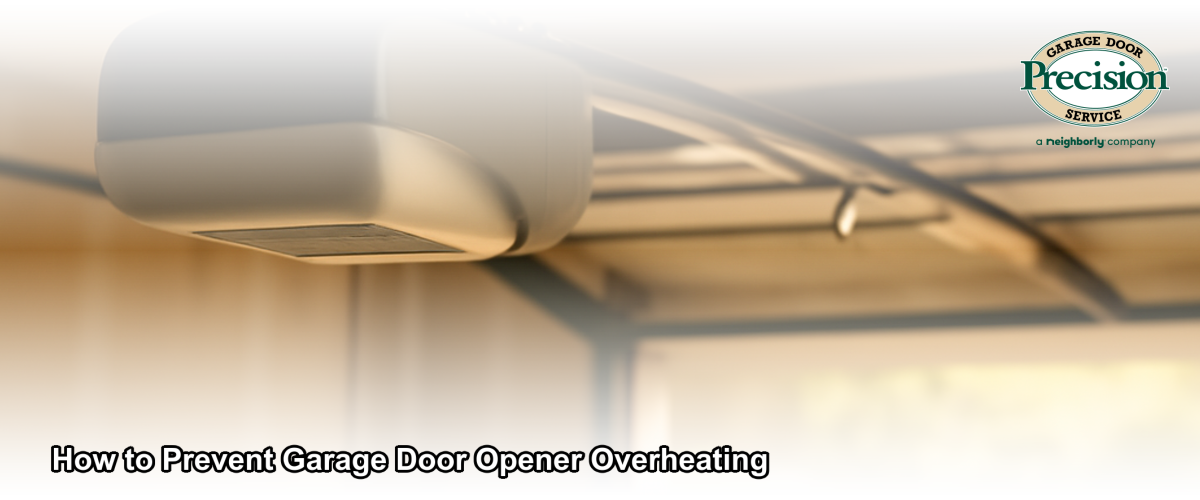
- Keep the opener’s motor unit clear of debris and dust — vents blocked by cobwebs or attic insulation dramatically reduce heat dissipation.
- Add ventilation to the garage — even a simple wall vent or ceiling fan can reduce ambient temperature by 10–15°F on hot days.
- Limit consecutive cycles during peak heat hours — if you need to test or adjust the door, do it in the morning rather than at 3 p.m. in August.
- Consider a belt-drive opener — belt-drive units generate less friction heat than chain-drive models and run quieter, a worthwhile upgrade for attached garages in Ventura homes.
Could Worn Springs or Cables Be Causing My Opener to Overheat?
Yes — worn or improperly tensioned torsion springs are one of the leading indirect causes of opener overheating, and this is one of the most important mechanical facts homeowners miss. When springs lose tension over time, the opener’s motor must compensate by drawing more amperage on every cycle, generating more heat in the process.
Precision Garage Door of Southern California includes a 25-point safety inspection with service visits, which covers spring tension, cable condition, roller wear, and hardware integrity — exactly the mechanical factors that silently shorten opener life. If your opener is running hot, a full door inspection should happen before you replace the motor unit.
What Are the Hidden Costs of an Overheating Opener If I Ignore It?
Ignoring repeated overheating leads to accelerated motor winding degradation, circuit board failure, and eventually complete opener failure — often at the least convenient moment, like the start of a workday or after dark. Replacement opener units range in price depending on drive type and features, and that cost is avoidable with early intervention.
At Precision Garage Door of Southern California, the standard diagnostic fee is $69.95 and the standard labor rate is $190 per hour. Catching a mechanical imbalance issue early — a spring adjustment or roller replacement — typically costs a fraction of a full opener replacement. Financing through Synchrony is available for both repairs and new installations if a full replacement does become necessary.
The real hidden cost is a failed opener that also stresses the door’s hardware over time, turning a single repair into a multi-component job. As covered in our guide to garage door spring maintenance, the motor and the mechanical door system are interdependent — you cannot protect one without maintaining the other.
Does a Smart Opener or Battery Backup Make Overheating Worse?
Smart openers with Wi-Fi connectivity and battery backup — like the LiftMaster myQ models Precision Garage Door Ventura installs — do add a small amount of standby heat because of the electronics required to maintain connectivity and keep the battery charged. In practice, this is a negligible contribution to overheating under normal conditions.
Battery backup units are actually worth prioritizing in Ventura and the broader Ventura County area precisely because summer heat and occasional grid events can coincide — and a backup battery ensures you are not stranded with a heat-disabled opener and no manual override ready. The camera and remote access features also let you confirm door status without additional open-close cycles that generate motor heat.
When Should I Call a Professional About an Overheating Garage Door Opener?
Call a licensed, insured technician when your opener trips its thermal cutout more than once in a week, when you notice burning smell or visible discoloration near the motor unit, or when the door feels noticeably heavier to lift manually than it did six months ago — that last sign points to a spring or cable issue that will keep overloading your opener until it is corrected.
Precision Garage Door of Southern California serves Ventura, Oxnard, Camarillo, Thousand Oaks, Moorpark, Simi Valley, and communities across Ventura County and into Santa Barbara — with same-day service availability, evening and weekend appointments at no extra charge, and 24/7 live-operator call answering. The technician team holds IDEA Certified Residential Technician credentials and completes months of classroom and on-road training before working solo. All work is guaranteed.
California State Contractor’s License #993555. Over 1,470 customer reviews back that guarantee with real results.
This guide was prepared by Precision Garage Door of Southern California’s IDEA Certified Residential Technicians, serving Ventura, CA and communities throughout Ventura County, Western San Fernando Valley, and Santa Barbara.
Frequently Asked Questions
Why does my garage door opener keep shutting off in the summer?
Your opener is likely tripping its built-in thermal overload protector, which cuts power to prevent motor damage when the unit gets too hot. This is more common in Southern California summers when garage interiors can reach extreme temperatures — and is often made worse by worn springs forcing the motor to work harder than it should.
How often should I have my garage door serviced to prevent opener overheating?
Lubricate springs, rollers, hinges, and tracks every 6 months, and schedule a full professional inspection at least once a year. Precision Garage Door of Southern California includes a 25-point safety inspection with every service visit, which catches the mechanical imbalances most likely to cause motor overheating before they become failures.
Can a bad garage door spring cause the opener to overheat?
Yes. A spring that has lost tension forces the opener motor to compensate on every cycle, drawing more current and generating more heat. Correcting spring tension is often the most cost-effective fix for an opener that overheats, and it should be evaluated before replacing the motor unit.
What does it cost to have an overheating garage door opener diagnosed in Ventura, CA?
Precision Garage Door of Southern California charges a $69.95 diagnostic fee and a standard labor rate of $190 per hour. Financing through Synchrony is available for both repairs and new opener installations. Evening and weekend appointments are available at no extra charge.
Is a belt-drive garage door opener better than a chain drive for preventing overheating?
Belt-drive openers generate less friction heat than chain-drive models during operation, making them a smart upgrade for attached garages in warm climates like Ventura. They also run significantly quieter, which is an added benefit for garages connected to living spaces.