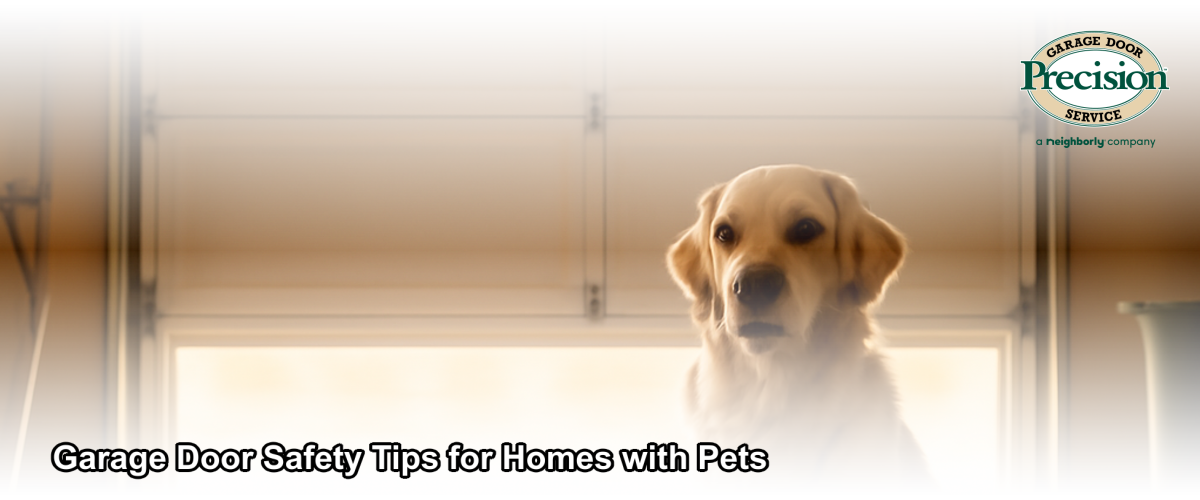
Why Is a Garage Door Dangerous for Pets?
A garage door is one of the heaviest moving objects in your home — and for pets, especially dogs and cats who move unpredictably, it represents a serious crush and entrapment hazard if the door’s safety systems are outdated, misaligned, or ignored. A standard residential garage door weighs between 130 and 350 pounds depending on material and size, and it moves fast enough to cause fatal injury to a small animal caught underneath or in the tracks.
At Precision Garage Door of Southern California, serving Ventura, CA and the surrounding Ventura County area, our IDEA Certified Residential Technicians respond to calls every week involving doors that have malfunctioned around pets — a problem that is almost always preventable with the right habits and hardware in place.
Are the Auto-Reverse and Photo-Eye Sensors on My Garage Door Working Correctly?
Your garage door’s auto-reverse mechanism and photo-eye sensors are the single most important safety features protecting your pets, and they must be tested monthly to confirm they are functioning as designed. The photo-eye sensors, mounted 4 to 6 inches off the ground on each side of the door opening, send an invisible infrared beam across the door’s path — if anything breaks that beam while the door is closing, the door reverses automatically.
To test the sensors yourself, place a two-by-four flat on the ground in the door’s path and trigger the close cycle. A properly functioning door will contact the board and immediately reverse. If it does not reverse, or if it reverses without any obstruction, the sensors are misaligned or failing and the door should not be used until a qualified technician inspects it.
Sensor height matters specifically for pets: a standard sensor mounted at 4 inches may still miss a cat or small dog crouching low. Ask your technician to confirm sensor placement is optimized for your household — this is one of the 25 points covered in Precision Garage Door’s comprehensive safety inspection.
What Garage Door Opener Features Are Safest for Homes with Pets?
Modern smart openers with real-time door monitoring are the most pet-safe option available, because they let you see and control your door remotely so you never accidentally close it on a pet who wandered into the garage. Precision Garage Door of Southern California installs LiftMaster smart Wi-Fi and myQ models, which include integrated cameras and smartphone alerts so you can visually confirm the garage is clear before closing from anywhere.
Additional opener features worth prioritizing for pet households include:
- Battery backup — keeps the door operable during power outages so pets are not trapped inside or locked out during Southern California’s periodic outages and storm events.
- Adjustable closing force — modern openers allow technicians to calibrate the force required to trigger an auto-reverse, reducing the threshold so even lighter contact triggers reversal.
- Belt drive over chain drive — quieter operation means less startling for noise-sensitive pets, reducing the chance they bolt unpredictably as the door moves.
Our team carries and services chain drive, belt drive, and jackshaft openers, and can walk you through the right fit for your home during a same-day appointment.
What Daily Habits Should Pet Owners Follow Around the Garage Door?
The most reliable pet safety measure is a consistent routine that keeps animals physically separated from the door’s travel zone whenever it is in motion. Even a perfectly calibrated door with working sensors can injure a pet that darts under it at the last second — sensor response time is fast, but not instantaneous.
Trusted habits Precision Garage Door’s IDEA Certified technicians recommend to Ventura-area homeowners include:
- Never trigger the door to close without visually confirming the garage is clear of pets first.
- Use a baby gate or interior door to keep pets out of the garage while you are loading or unloading the car.
- Store all remotes and keypads out of reach of children who may activate the door without checking the area first.
- Keep pets on a leash when entering or exiting through the garage, especially dogs who may chase cars or wildlife into the path of the closing door.
- Never let a pet ride in the garage while the door is in motion, even briefly.
How Does Ventura’s Climate Affect Garage Door Safety for Pets?
Ventura’s coastal Mediterranean climate — mild winters, warm summers, and persistent marine layer humidity — creates specific mechanical conditions that affect how reliably your garage door’s safety systems perform. Salt-laden coastal air accelerates corrosion on springs, cables, and sensor brackets, which can cause sensors to drift out of alignment without any visible warning.
During summer heat spikes inland across Ventura County, metal tracks and springs expand, which can alter the door’s balance and change the force required to trigger auto-reverse. A door that passed a manual test in February may not perform identically in August. Precision Garage Door of Southern California recommends a professional safety inspection at least once per year — and more frequently for homes within a few miles of the Ventura coastline where corrosion risk is highest. As covered in our full maintenance guide, lubrication of rollers, hinges, and springs with a silicone-based product every six months is particularly important in coastal environments.
Should I Schedule a Professional Garage Door Safety Inspection for My Pet’s Sake?
A professional 25-point safety inspection is the most reliable way to identify hidden hazards — worn torsion springs, frayed cables, sensor drift, or inadequate auto-reverse force — that a homeowner’s visual check will miss. Precision Garage Door of Southern California’s IDEA Certified Residential Technicians perform this inspection as a standard part of every service visit.
The diagnostic service call fee is $69.95, and the standard labor rate is $190 per hour. Financing for both repairs and new installations is available through Synchrony — applications are described as fast and convenient, with specific rates available by calling the Ventura office. Precision Garage Door is open 7 days a week, with evening and weekend appointments available at no extra charge, making it straightforward to schedule around your workday.
With over 1,470 customer reviews and professionally trained technicians who complete months of classroom and field training before working solo, Precision Garage Door of Southern California stands behind every inspection and repair with a full guarantee. California State Contractor’s License #993555.
What Hidden Costs or Add-Ons Should Pet Owners Expect When Upgrading for Safety?
A sensor replacement or realignment on an existing opener is typically resolved within a single service visit at the $190/hour labor rate plus parts. Upgrading to a LiftMaster smart opener with camera and battery backup involves the cost of the unit itself plus installation labor — our team can quote this during a same-day visit.
If your door itself is aging — older than 10 to 15 years, making grinding noises, or failing balance tests — new garage doors at Precision Garage Door of Southern California start at $1,657, covering steel, carriage house, custom wood, glass, and raised panel styles. A failing door body compounds every sensor problem: no amount of sensor tuning compensates for a door that is physically out of balance or has broken springs. See our guide to spring repair and replacement for more on what structural issues look like and what they cost to address.
What is always included at no extra charge: evening and weekend service, 24/7 live-operator call answering, and the guarantee that all work is backed by Precision Garage Door of Southern California’s commitment to quality and reliability.
This guide was prepared by Precision Garage Door of Southern California’s IDEA Certified Residential Technicians, proudly serving Ventura, CA and communities across Ventura County from Simi Valley and Moorpark to Santa Barbara.
Frequently Asked Questions
Can a garage door injure or kill a pet?
Yes. A residential garage door can weigh between 130 and 350 pounds and moves quickly enough to cause serious or fatal injury to a pet caught underneath it or in the track path. Working auto-reverse sensors and consistent safe habits are essential for any home with animals.
How do I test my garage door sensors to make sure they will protect my pet?
Place a two-by-four flat on the ground in the door’s path and trigger the close cycle. The door should contact the board and immediately reverse. If it does not reverse — or reverses without contact — the sensors need professional realignment or replacement before the door is used again.
How often should I have my garage door inspected if I have pets?
At least once per year, and more often if your home is near the Ventura coastline where salt air accelerates sensor bracket and hardware corrosion. Precision Garage Door of Southern California’s 25-point safety inspection covers all the critical systems that protect pets.
What is the safest type of garage door opener for a home with dogs or cats?
A smart Wi-Fi opener with a built-in camera and smartphone alerts — such as the LiftMaster myQ models installed by Precision Garage Door of Southern California — lets you visually confirm the garage is clear before closing remotely. Battery backup also prevents pets from being trapped during power outages.
How much does a garage door safety inspection cost in Ventura, CA?
Precision Garage Door of Southern California charges a $69.95 diagnostic service call fee and a $190/hour labor rate. The 25-point safety inspection is included as part of every service visit, and financing through Synchrony is available for repairs or new installations.