ClickCease

Garage Door Repair Safety Measures for Homeowners in Ventura County

By Precision Garage Door Services Editorial Team · Updated 2026-08-10

Precision Garage Door Services in Ventura, California, recommends disconnecting the automatic opener before inspecting springs or cables, keeping hands clear of moving tracks, and scheduling annual professional tune-ups. Homeowners avoid DIY torsion spring repairs, since improper handling causes serious injury and costly damage to residential garage door systems.

Torsion springs pose the greatest injury risk during garage door repair, requiring homeowners to avoid DIY adjustment entirely. Precision Garage Door Services, based in Ventura, California, recommends professional handling of high-tension components, alongside 24-hour emergency service availability for urgent repairs in Ventura County.

Ventura County homeowners face serious injury risk from high-tension springs. California garage door safety laws regulate installation and repair standards for these systems. Precision Garage Door Services recommends avoiding torsion spring adjustments entirely, keeping fingers clear of panel edges, and scheduling certified technician inspections rather than attempting DIY repairs on tensioned components.

Key Takeaways

  • California implements specific garage door safety laws that regulate installation, repair, and replacement procedures for homeowners.
  • Torsion spring adjustments cause serious injuries; professional technicians handle these dangerous repairs to prevent accidents.
  • Garage doors rank among the largest moving parts in homes, requiring proper maintenance and expert service.
  • Precision Garage Door Services and Ventura County providers offer 24-hour emergency repair availability for urgent situations.

What Should You Check Before Attempting Repairs?

Three things determine whether a repair is safe for a Ventura County homeowner to attempt: the home’s age and construction, the condition of key hardware, and the placement of opener controls. Skipping this inspection risks pinched fingers, snapped cables, or a door that falls unexpectedly. A locally owned Ventura garage door company brings an advantage here. Technicians familiar with the area understand how older homes in communities like Oxnard or Camarillo were built. How that construction affects what’s safe to touch before repairs begin.

How Do Technicians Spot Hazards Homeowners Miss?

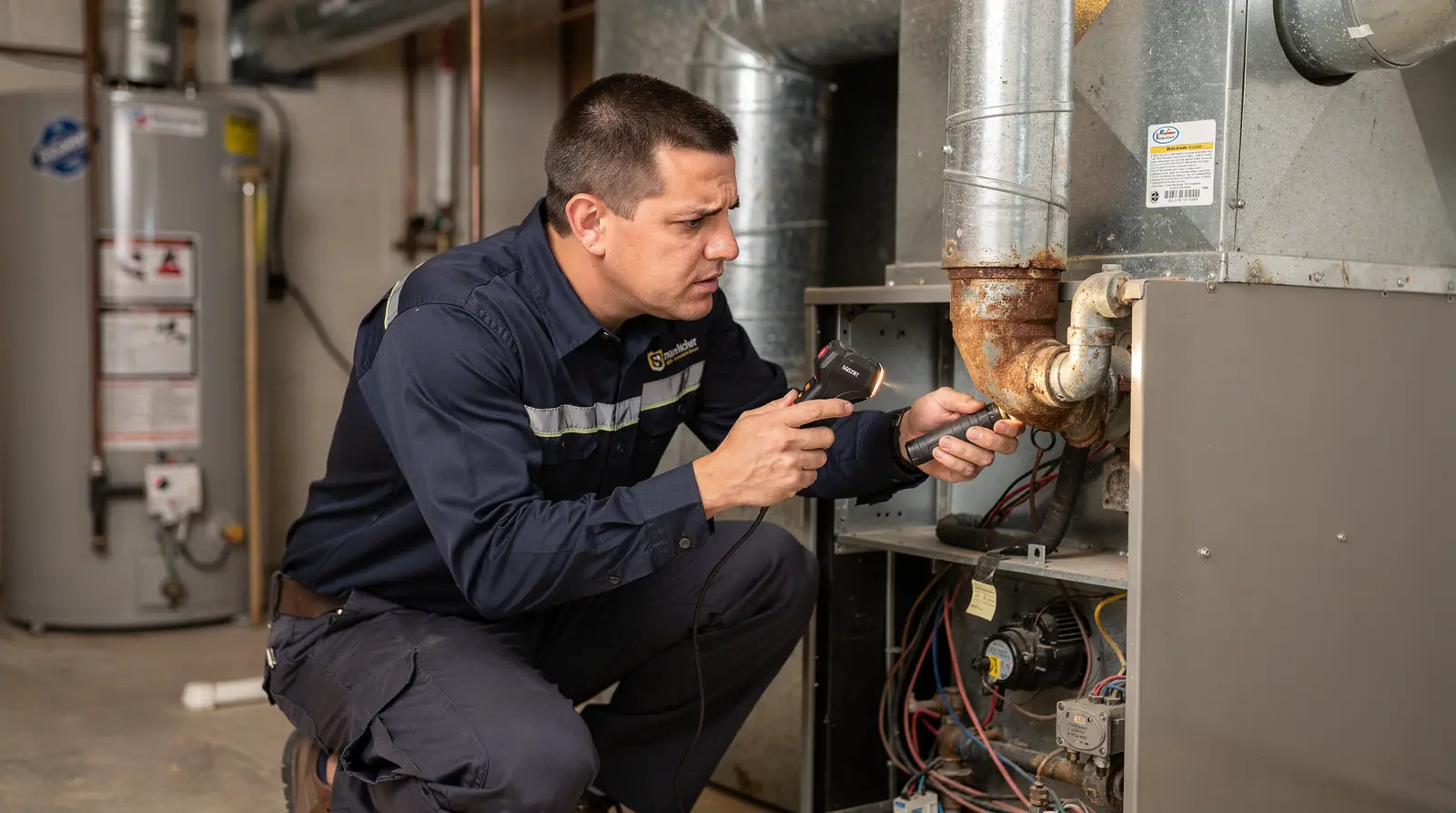
IDEA certified residential technicians train specifically to catch warning signs on springs, cables, and openers. Frayed cable strands, rusted spring coils, and worn pulleys often look minor to an untrained eye but signal imminent failure. Garage door repair safety measures rely on this trained inspection step before any tool touches the system.

Where Should Opener Controls Be Mounted?

Wall-mounted controls, including keypads, belong at least five feet above the floor. This height keeps curious toddlers from reaching the button and triggering the door unexpectedly.

Before attempting any repair, homeowners should check:

  1. Spring coils for rust, gaps, or visible stretching
  2. Cables for fraying near the drum or bottom bracket
  3. Control panel height against the five-foot minimum
  4. Sensor alignment near the floor track

Any hazard found on this list signals a stop point — professional service, not DIY effort, comes next.

How Do You Perform Safety Checks Step By Step?

A proper safety inspection follows a defined sequence, not a random glance at the door. Ventura County homeowners who skip steps risk missing the exact hazard most likely to cause injury. The following order keeps garage door repair safety measures consistent from driveway to opener unit.

  1. Disconnect the opener and visually inspect springs, cables, and pulleys for fraying, rust, or gaps in coil spacing.
  2. Test the auto-reverse function by placing a block of wood in the door's path; California law requires automatic reverse devices and entrapment protection sensors on every residential opener.
  3. Check photo-eye sensors near the floor for alignment and clean lenses of dust or cobwebs.
  4. Listen for grinding or popping sounds during a manual open-and-close cycle, which often signals spring wear.
  5. Note any resistance or uneven movement, then schedule professional service rather than forcing the door further.

Should Homeowners Ever Touch the Torsion Spring?

No. Adjusting a torsion coil spring without training risks serious injury, including pinched fingers or sudden release under tension. This step belongs exclusively to trained technicians.

Why Does Timing Matter After a Hazard Is Found?
Same-day appointment availability lets Ventura County homeowners get dangerous components addressed the moment a problem surfaces, shrinking the window of exposure. Repairs backed by best-in-class warranties also confirm safety-critical parts were installed correctly, with corrections guaranteed if issues resurface later.

When Should You Call A Licensed Ventura Technician?

A licensed technician should handle any garage door problem involving springs, cables, sensors, or repeated malfunctions. Ventura County homeowners who attempt these fixes alone risk serious injury from components under extreme tension. Waiting or guessing at a repair only raises that risk.

Garage door repair safety measures exist precisely because these systems combine heavy hardware with electronic controls. Precision Garage Door Services operates out of Ventura, California, which allows technicians to reach homeowners across the county without long delays. Quick response matters most when a spring snaps or a door jams halfway open.

What if a garage door breaks down at night or on a weekend?

Phones stay answered 24/7. A homeowner facing a stuck door or sudden spring failure at midnight reaches a real technician immediately. Calling for help beats improvising a fix in the dark. Attempting a repair without proper tools or training after hours increases the chance of pinched fingers or a falling door panel.

How can homeowners tell if entrapment sensors are working correctly?

Entrapment protection sensors must stop or reverse the door the instant they detect a person or object in its path. Testing this function correctly requires professional calibration, not a visual check. A licensed technician should be called whenever:

  • The door fails to reverse after contacting an object
  • Sensor lights flicker or fail to align
  • The opener reverses unpredictably during normal use

Prioritizing garage door safety protects your family and property while extending your system’s lifespan. By understanding common hazards, performing routine maintenance, and recognizing when professional intervention is necessary, you take control of your home’s security. Precision Garage Door Services remains committed to helping Ventura County homeowners maintain safe, reliable garage door systems through expert repairs and quality service. Your safety is our priority.

FAQ

Should homeowners attempt torsion spring repairs themselves?

No. Torsion springs pose the greatest injury risk during garage door repair. Precision Garage Door Services recommends homeowners avoid DIY adjustments entirely and schedule certified technician inspections instead.

Where should garage door opener controls be mounted?

Wall-mounted controls, including keypads, belong at least five feet above the floor, keeping curious toddlers from reaching the button and triggering the door unexpectedly.

What should homeowners check before attempting repairs?

Check spring coils for rust or stretching, cables for fraying near the drum, control panel height against the five-foot minimum, and sensor alignment near the floor track before doing anything else.

Facts

  • Precision Garage Door Services is located in Ventura, California, US.