
Why do Ventura homeowners need to think about earthquake safety for their garage doors?
Ventura, CA sits within one of the most seismically active regions in the United States, positioned near the San Andreas Fault system and the active Ventura Fault — a fault that USGS researchers have flagged as capable of producing a magnitude 8.0 or larger event. A garage door is the single largest moving panel on most homes, and when ground motion strikes, an unbraced door can rack, jam, or collapse entirely — trapping vehicles inside, blocking emergency egress, and creating a structural weak point in the garage wall.
Precision Garage Door Ventura regularly inspects homes throughout Ventura County where standard doors are installed with no seismic hardware whatsoever. That is not a code violation in older homes, but it is a safety exposure worth addressing before the next significant shake.
What actually happens to a garage door during an earthquake?
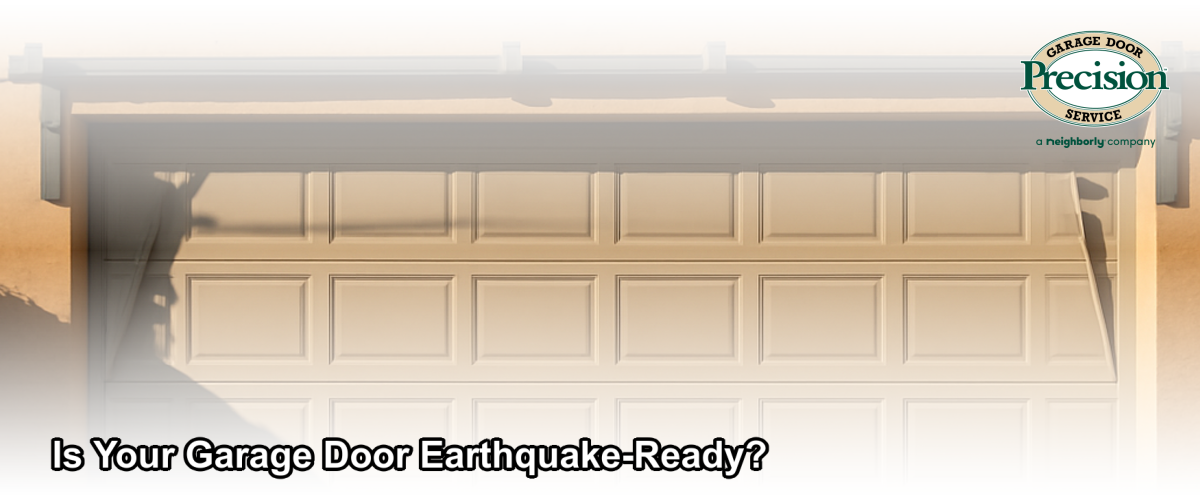
During lateral ground shaking, a garage door experiences racking — a diagonal distortion of the door frame and panels that can permanently bend the tracks, shear the bottom bracket bolts, and cause the door to bind in the open or closed position. The torsion spring above the door, which stores a significant amount of mechanical energy, can also shift off its mounting or snap under sudden shock loading, creating a serious secondary hazard.
Steel-backed sectional doors perform better than single-layer aluminum doors in seismic events, but even quality doors fail when the vertical tracks are not secured to properly anchored framing. The track-to-wall connection is one of the first things an IDEA Certified Residential Technician at Precision Garage Door Ventura checks during a seismic readiness inspection.
What is a garage door seismic brace kit and do I need one in Ventura?
A seismic brace kit — sometimes called a horizontal brace or earthquake brace kit — is a set of diagonal steel struts that attach to the top section of a sectional garage door and connect to the horizontal track, preventing the door from racking out of square during lateral movement. California’s current residential building code (CBC Section 1613) references seismic design requirements, and the California Residential Code requires seismic bracing on new garage door installations in high seismic zones — a category that covers all of Ventura County.
If your home was built before these requirements were broadly enforced, or if you have replaced a door without pulling a permit, there is a real chance your current installation has no seismic bracing at all. Retrofit kits are available and can typically be installed on existing doors without replacing the door itself.
How much does a seismic brace or earthquake readiness inspection cost in Ventura?
The cost of a garage door seismic readiness inspection in Ventura varies depending on what the technician finds, but a standard diagnostic visit from Precision Garage Door Ventura will assess track anchoring, spring condition, bottom bracket integrity, and the presence or absence of seismic bracing hardware. Retrofit seismic brace kits for a standard single-car door typically run $75–$150 in parts alone; a double-car door may require $150–$300 in hardware. Labor for a retrofit installation generally adds $100–$200 depending on the complexity of the existing track system.
If the inspection also reveals worn springs, damaged cables, or compromised bottom brackets — all of which reduce earthquake resilience independently — those repairs are quoted separately. As covered in our guide to garage door spring replacement, a standard torsion spring replacement in Ventura typically runs $175–$275 per spring installed by a certified technician.
What hidden costs should I plan for when earthquake-proofing my garage door?
Beyond the brace kit and labor, a few additional items commonly surface during seismic prep work:
- Anchor bolt upgrades: Older track mounting hardware is often lag-screwed into drywall or unblocked framing. Upgrading to through-bolts with backing plates adds $50–$100 but dramatically improves pullout resistance.
- Framing reinforcement: If the header above the door is undersized or cracked, a licensed contractor may need to sister or replace it before the brace kit can be properly anchored — this is outside Precision Garage Door Ventura’s scope but we will flag it clearly in writing.
- Opener disconnect testing: Modern garage door openers have a manual release cord for power-outage use. After a quake, this cord is your primary way out if the door jams. We test manual release function on every seismic inspection at no added charge.
- Battery backup for the opener: Power outages commonly follow significant seismic events. A battery backup unit for your opener runs $150–$250 installed and ensures you can operate the door without grid power.
What should I check on my garage door immediately after an earthquake?
After any earthquake strong enough to knock items off shelves — roughly magnitude 4.5 or greater — do a visual inspection of your garage door before operating it. Look for visible bends or kinks in the vertical or horizontal tracks, gaps where the track meets the wall bracket, any visible crack or separation in the top panel where a brace strut should connect, and the spring above the door for any asymmetry or sagging that was not there before.
Do not force a door that feels heavier than normal or binds partway through its travel. A door that has racked out of square can slip off the tracks entirely if operated under power. Call Precision Garage Door Ventura for a post-earthquake inspection before resuming normal use — our IDEA Certified Residential Technicians are trained to spot damage that is not obvious to the untrained eye.
Is this a DIY project or should I hire a professional in Ventura?
Inspecting the visual condition of your tracks and hardware is a reasonable DIY task, and reviewing whether your door has any seismic brace struts visible at the top panel takes less than a minute. Installing a seismic brace kit, however, involves working directly with torsion spring hardware under tension, drilling into structural framing, and torquing hardware to manufacturer spec — all of which carry meaningful injury and liability risk if done incorrectly.
California’s seismic zones leave no room for a marginally installed brace that pulls out of unblocked framing in the first significant shake. Precision Garage Door Ventura’s IDEA Certified Residential Technicians are trained specifically in the installation standards that make seismic hardware perform as intended, not just look like it is installed. See our full guide to DIY vs. professional garage door maintenance for a breakdown of what is safe to handle yourself and what is not.
How often should I have my garage door inspected for earthquake readiness in Ventura?
A full seismic readiness inspection is recommended any time a notable earthquake occurs in the region, whenever you move into a home built before 2000, or after any garage door repair that involved removing and reinstalling the torsion spring assembly. Beyond event-triggered inspections, an annual tune-up and safety check — part of Precision Garage Door Ventura’s standard maintenance program — includes a review of track anchoring and hardware integrity that catches seismic vulnerabilities before a quake makes them urgent.
Ventura’s coastal climate also accelerates corrosion on exposed steel hardware, particularly within a few miles of the ocean. Salt air pitting on track brackets and cable drums reduces the mechanical strength of those components, compounding seismic risk. Hardware replacement intervals that might be every 10 years inland can drop to every 5–7 years for homes near the Ventura coastline.
This guide was prepared by Precision Garage Door Ventura’s IDEA Certified Residential Technicians, serving Ventura and communities throughout Ventura County.
Frequently Asked Questions
Does California law require seismic bracing on garage doors in Ventura?
Yes. The California Residential Code requires seismic bracing on new garage door installations in high seismic design zones, which includes all of Ventura County. Existing doors installed before these requirements were enforced are not automatically grandfathered into compliance from a safety standpoint, and retrofit bracing is strongly recommended.
Can my existing garage door be retrofit with seismic bracing, or do I need a new door?
Most existing sectional garage doors can accept a retrofit seismic brace kit without replacing the door. The kit attaches to the top section and horizontal track. A technician needs to confirm the top panel and framing are in adequate condition to anchor the hardware properly — if the door or header is damaged, additional work may be needed first.
What is the biggest earthquake risk a garage door creates for a home?
The primary risk is loss of egress — a racked or jammed door can trap vehicles and block an exit route during or after a quake. A secondary risk is the torsion spring, which stores significant mechanical energy and can fail violently if the spring mount is sheared by ground movement.
How do I know if my garage door already has seismic bracing installed?
Look at the top panel of your garage door from inside the garage. Seismic brace struts appear as diagonal or horizontal steel bars running from the top corners of the door toward the center or toward the horizontal track. If you see only the standard horizontal reinforcement strut and nothing connecting at an angle to the track system, your door likely lacks seismic bracing.
Should I open my garage door right after an earthquake?
Not immediately. Visually inspect the tracks, brackets, and top panel for bends, gaps, or visible damage before operating the door. A door that has racked out of square can derail entirely under power. If anything looks different from before the quake, contact Precision Garage Door Ventura for an inspection before using the door.