Why is my garage door color fading so fast in Ventura?
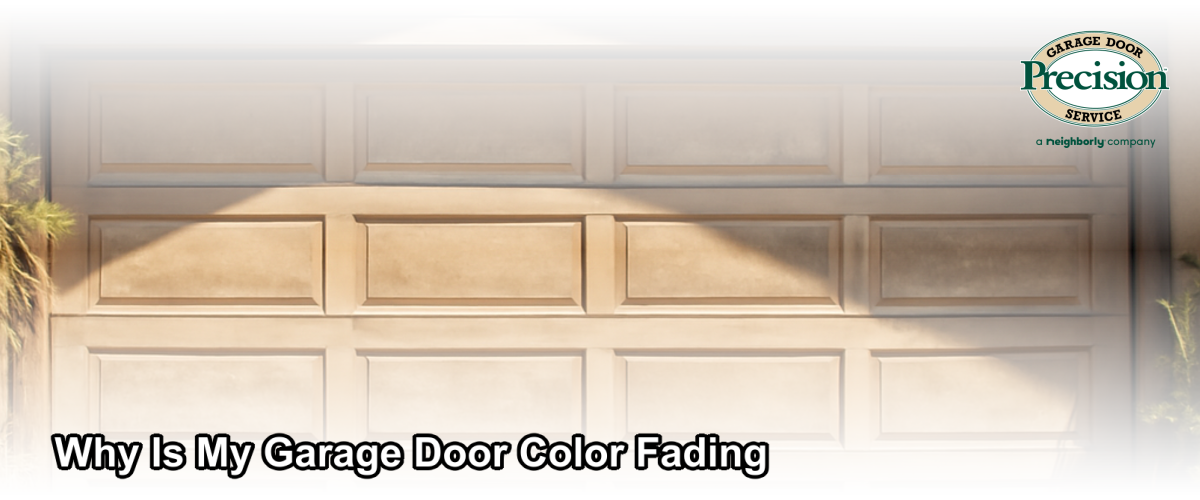
Garage door color fading in Ventura, CA accelerates faster than in most U.S. cities because of the region’s unique combination of intense coastal UV exposure, salt-laden marine air, and wide daily temperature swings. A door that holds its finish for a decade in a northern inland climate may show visible bleaching and chalking in as few as three to five years here without proper protection.
Understanding the specific causes makes it possible to slow the process significantly — and sometimes to choose the right door material from the start. The sections below walk through every major culprit Precision Garage Door Ventura technicians diagnose on service calls throughout the Ventura area.
How does UV radiation cause garage door fading?
Ultraviolet radiation from direct sunlight breaks down the chemical bonds in paint pigments and factory finishes, causing them to lose color intensity and eventually chalk or peel — and in Ventura, CA, south- and west-facing garage doors receive some of the most intense UV exposure on the California coast.
Ventura sits at roughly 34° north latitude with an average of over 280 sunny days per year. Doors with no UV-inhibiting topcoat or with a thin single-stage paint absorb that radiation continuously. Dark colors — navy, charcoal, deep red — absorb more UV energy and fade more visibly than lighter neutrals, though no untreated finish is fully immune.
The fix starts at the product level. Steel and aluminum doors with a baked-on polyester powder coat hold up considerably better than field-painted wood or hardboard doors, because the powder coat bonds to the substrate at the molecular level rather than sitting on top as a surface film.
Does Ventura’s ocean air speed up garage door color loss?
Yes — salt air from the Pacific Ocean deposits microscopic chloride particles on painted surfaces, which accelerate oxidation and cause paint to break down from the outside in, stripping color and sheen far faster than UV alone would.
Homes within roughly a mile of the coastline — including neighborhoods close to Ventura Harbor and Pierpont Beach — experience the heaviest salt deposition. But the marine layer that rolls in most mornings carries moisture and salinity well inland, meaning properties several miles from the shore are not immune.
Salt damage compounds UV damage. A door already weakened by UV bleaching develops micro-cracks in its finish layer; salt moisture then penetrates those cracks and accelerates the color loss from beneath. Regular rinsing with fresh water — as simple as a hose-down once a month — removes deposited chlorides before they can work into the finish.
Can heat and temperature changes fade a garage door’s finish?
Repeated thermal cycling — surfaces heating rapidly in direct sun and cooling after sunset — causes paint and finish layers to expand and contract, eventually cracking the film and allowing moisture and UV to attack the substrate beneath, which visually registers as fading, flaking, or chalking.
In Ventura, dark-colored garage doors exposed to afternoon sun can reach surface temperatures of 150°F or higher on a warm day, even when the air temperature is only in the mid-70s. That thermal stress is especially hard on wood doors and steel doors with a thin liquid paint finish rather than a powder coat.
Temperature swings also affect how well sealants adhere over time. If you have recently noticed your door’s color looking dull or powdery rather than uniformly bleached, thermal cycling breaking down the clear-coat layer is a likely contributor — and it often happens alongside UV damage rather than independently of it.
Does garage door material affect how quickly it fades?
Material choice is one of the single biggest factors in fade resistance — steel doors with factory powder-coat finishes consistently outlast wood, aluminum, and fiberglass doors with applied paint finishes in harsh coastal UV environments like Ventura’s.
- Steel with powder coat: Most fade-resistant common material; baked finish bonds chemically to the metal. Expect 10–15 years before significant color shift with basic maintenance.
- Aluminum: Lighter than steel but thinner substrate; powder-coat options exist but anodized finishes can oxidize and cloud in salt air.
- Wood: Requires the most active maintenance — repainting or restaining every 3–5 years in coastal climates. Absorbs moisture through micro-cracks and fades fastest of all common materials.
- Fiberglass/composite: Resistant to rust and rot, but gel-coat surfaces can chalk and yellow under sustained UV; color options are more limited.
- Vinyl: Colorfast in moderate climates but can become brittle and lose sheen in sustained heat above 90°F.
If you are choosing a new door for a coastal Ventura property, Precision Garage Door Ventura’s IDEA Certified Residential Technicians can walk you through material and finish specifications that are matched to your home’s specific sun and wind exposure — see our full door replacement guide for a deeper comparison.
What role does improper installation or preparation play in early fading?
A garage door that was field-painted without proper surface preparation — cleaning, priming, and sealing the substrate — will begin fading or peeling in as little as one to two years, regardless of the quality of the topcoat used, because moisture and UV attack the unsealed surface underneath and lift the paint from below.
This is a common finding on doors that were repainted as a cosmetic update rather than replaced. If a previous owner simply painted over an existing faded or chalked surface without stripping or sanding, the new paint has no mechanical bond to a clean substrate. Ventura’s morning marine humidity then enters through invisible surface defects, and fading follows quickly.
Proper preparation also means applying a UV-inhibiting primer before topcoat on any door that faces south or west, and using an exterior-grade finish rated for coastal environments. Cutting those steps to save time or cost is the most predictable path to premature color loss.
Are there maintenance steps that slow garage door fading in coastal climates?
Yes — a consistent, simple maintenance routine can meaningfully extend the life of any garage door finish in Ventura’s coastal environment, even on doors that are already showing early-stage color loss.
The most effective routine combines three habits:
- Monthly rinse: Hose the door surface with fresh water to remove salt, dust, and airborne pollutants before they work into the finish.
- Annual wash and wax: Clean the door with a mild detergent, rinse thoroughly, and apply an automotive-grade carnauba wax or a product specifically rated for painted metal or composite surfaces. The wax layer acts as a sacrificial UV barrier.
- Prompt touch-up: Address chips, scratches, or peeling edges within the same season they appear. An unsealed substrate exposed to Ventura’s sun and salt air will expand a small defect into a large faded patch within one to two seasons.
As covered in our garage door maintenance guide, the same annual inspection that addresses springs, cables, and weatherstripping is also the right time to evaluate the door’s finish condition — catching color degradation early is far less costly than a full repaint or panel replacement later.
When does garage door fading mean it is time to replace the door?
Fading alone rarely requires door replacement, but when color loss is accompanied by structural symptoms — warping, delamination, deep rust, or panels that have become brittle — replacement is almost always more cost-effective than repeated refinishing in the long run.
Precision Garage Door Ventura’s IDEA Certified Residential Technicians evaluate finish condition as part of every service call throughout the Ventura, CA area. If your door’s substrate is still sound, a professional repaint or panel swap may restore both appearance and performance. If the finish failure has allowed moisture into the door’s core, no cosmetic treatment will address the underlying structural degradation.
A straightforward rule of thumb: if you have refinished a door twice in under ten years and are facing the same problem again, the product or its finish specification is not suited to your home’s exposure level, and upgrading to a powder-coated steel door will cost less over a decade than continued refinishing cycles.
This guide was prepared by Precision Garage Door Ventura’s IDEA Certified Residential Technicians, serving Ventura, CA and the surrounding coastal communities.
Frequently Asked Questions
Why does my garage door fade so much faster than my neighbors’ in Ventura?
Differences in door orientation, material, and finish type account for most of the variation. A south- or west-facing door in direct afternoon sun receives far more UV and heat stress than a north-facing door across the street. Doors with a powder-coat factory finish resist fading significantly longer than field-painted or single-stage painted surfaces in Ventura’s coastal climate.
How often should I repaint my garage door in a coastal California climate?
Most painted wood or hardboard garage doors in coastal Ventura need refinishing every three to five years. Steel doors with a factory powder-coat finish can go ten to fifteen years before significant color shift, especially with an annual wax application and monthly rinsing to remove salt deposits.
Does salt air really damage garage door paint that far from the beach?
Yes. The marine layer that moves through Ventura most mornings carries moisture and chlorides well inland — not just to properties immediately on the coast. Salt deposits accelerate paint oxidation and compound UV damage by entering micro-cracks in the finish, so even homes several miles from the ocean benefit from regular fresh-water rinsing.
What is the most fade-resistant garage door material for a home in Ventura, CA?
Steel doors with a baked-on polyester powder-coat finish are the most fade-resistant common option for coastal Southern California. The powder coat bonds to the substrate chemically rather than sitting on top as a film, making it substantially more resistant to UV bleaching, salt oxidation, and thermal cycling than painted wood or aluminum doors.
Can I stop my garage door from fading without replacing it?
In most cases, yes — if the door’s substrate is structurally sound. An annual wash-and-wax routine, prompt touch-up of chips and scratches, and monthly rinsing to remove salt and debris will meaningfully slow color loss. If the finish has already chalked or peeled, a professional refinish with a UV-inhibiting primer and exterior-grade topcoat can restore protection before the underlying material is compromised.